

PATIENT GUIDE · LAHORE
Understand your scan. Know your treatment options.
Gallstones do not always need an operation. If you have pain, repeated attacks or an ultrasound showing stones, discuss whether observation, further tests or laparoscopic gallbladder surgery is appropriate for you.
Consultations with Prof. Dr. Zahid Mahmood, MBBS, FCPS
General, Laparoscopic & Laser Surgeon
پتے کی پتھری: کیا آپریشن ضروری ہے؟
ہر مریض کو آپریشن کی ضرورت نہیں ہوتی۔ اپنی علامات اور الٹراساؤنڈ کے مطابق مشورہ لیں۔ اپائنٹمنٹ کے لیے فون یا WhatsApp پر رابطہ کریں؛ کلینک آپ کے وقت کی تصدیق کرے گا۔
Symptoms · Treatment options · Recovery · Common questions · Clinic & appointments
Watch: symptoms, assessment & treatment
Explore the complete Gallstones Video Library
View patient awareness posters (10)
Gallstones: patient awareness posters
Tap any poster to view it full size.
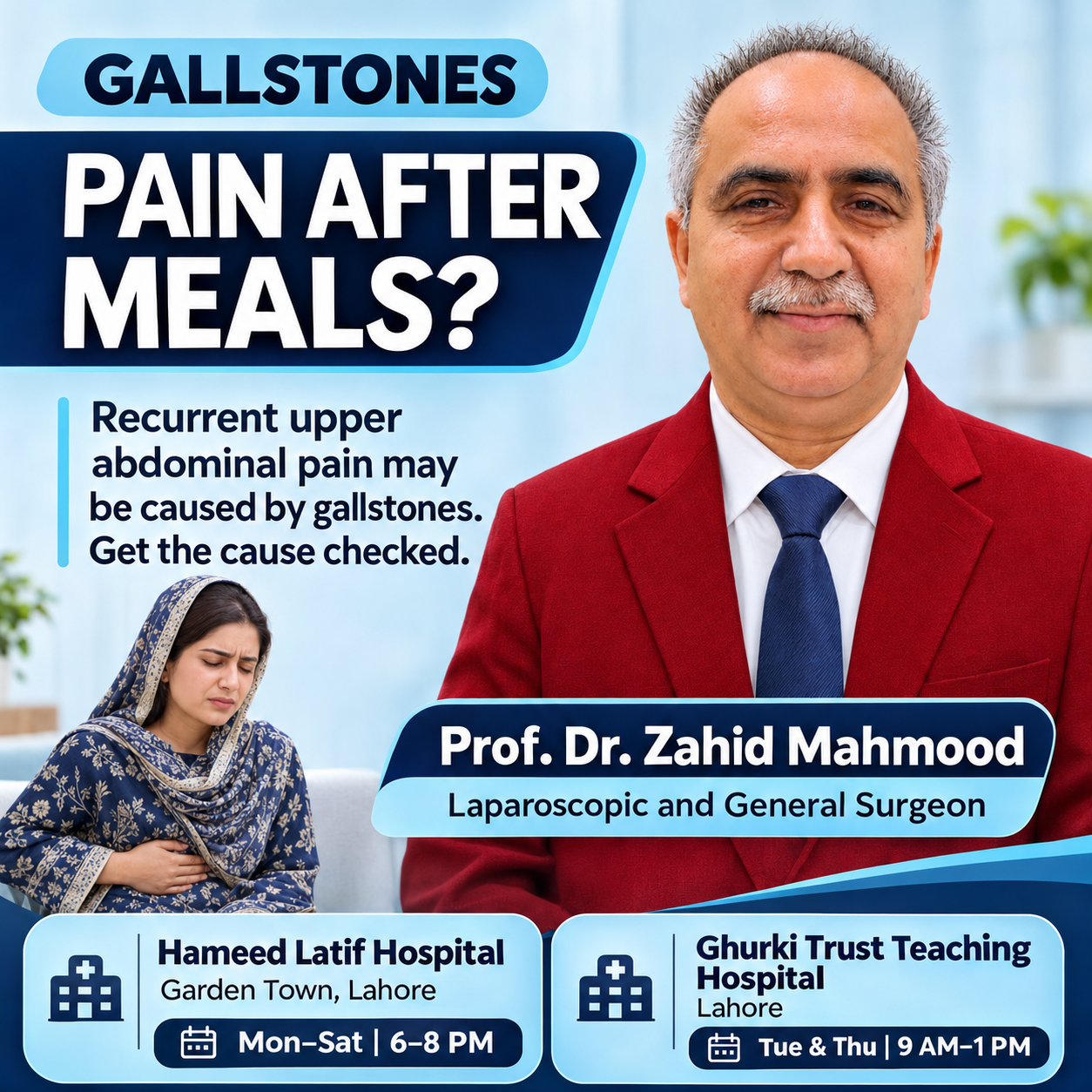
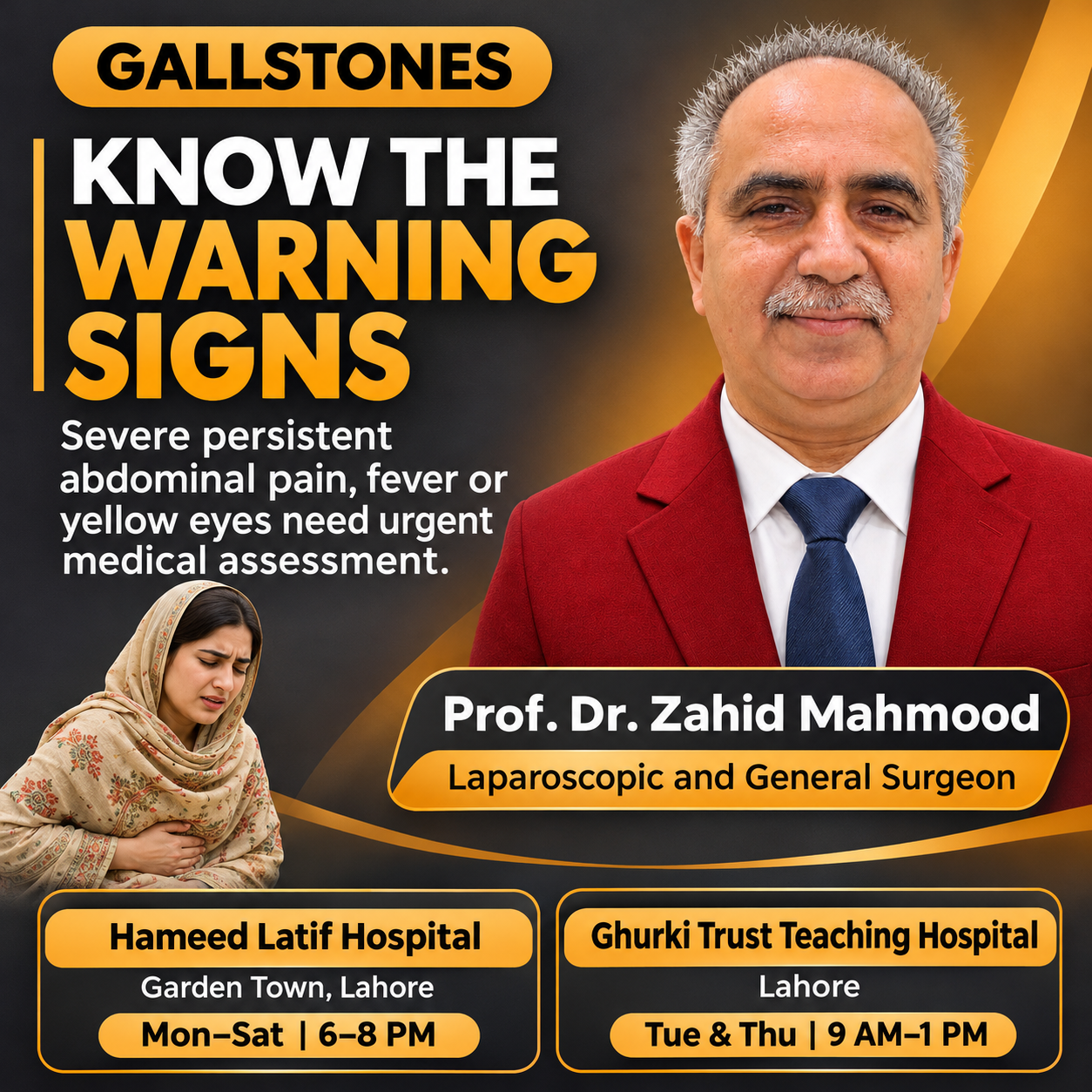
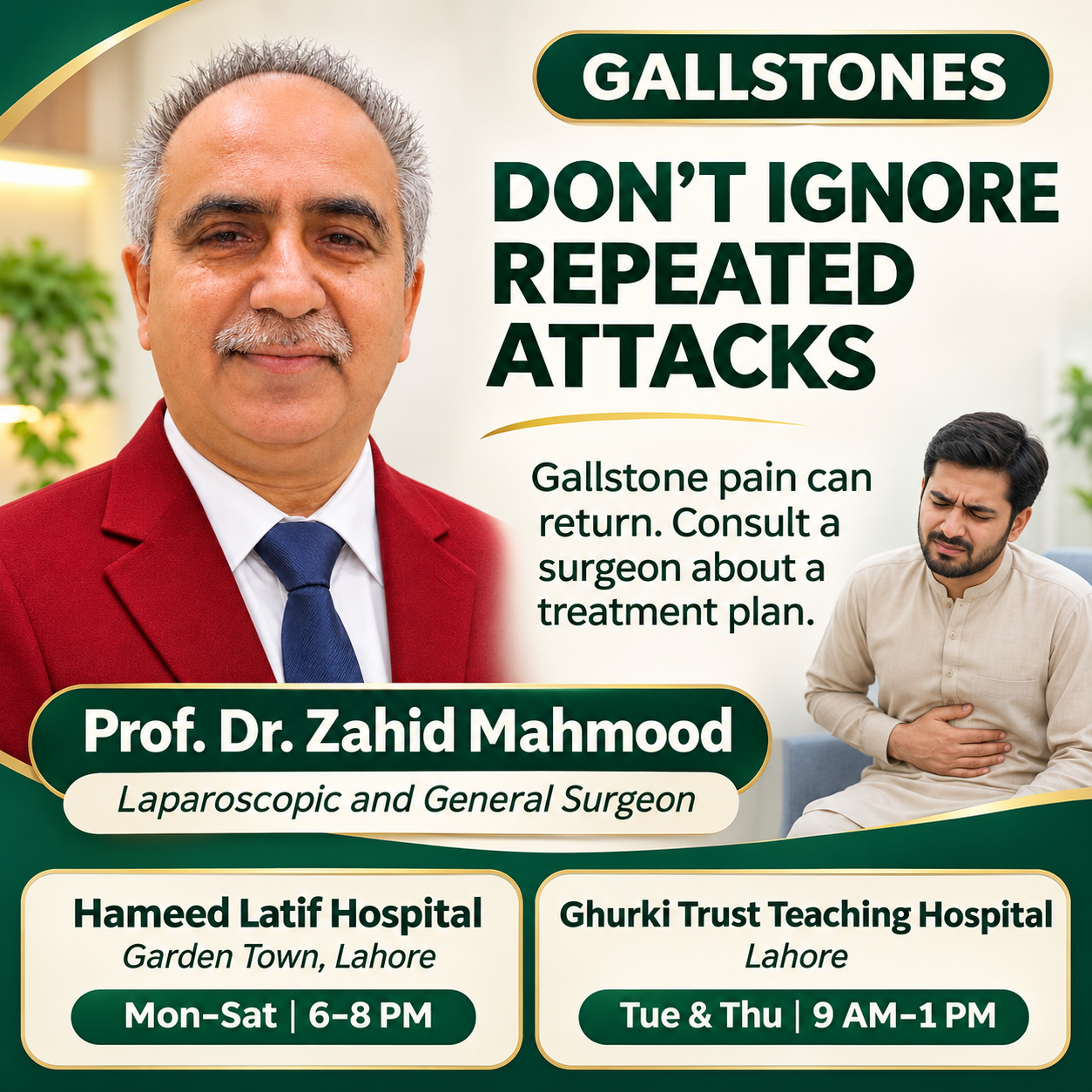
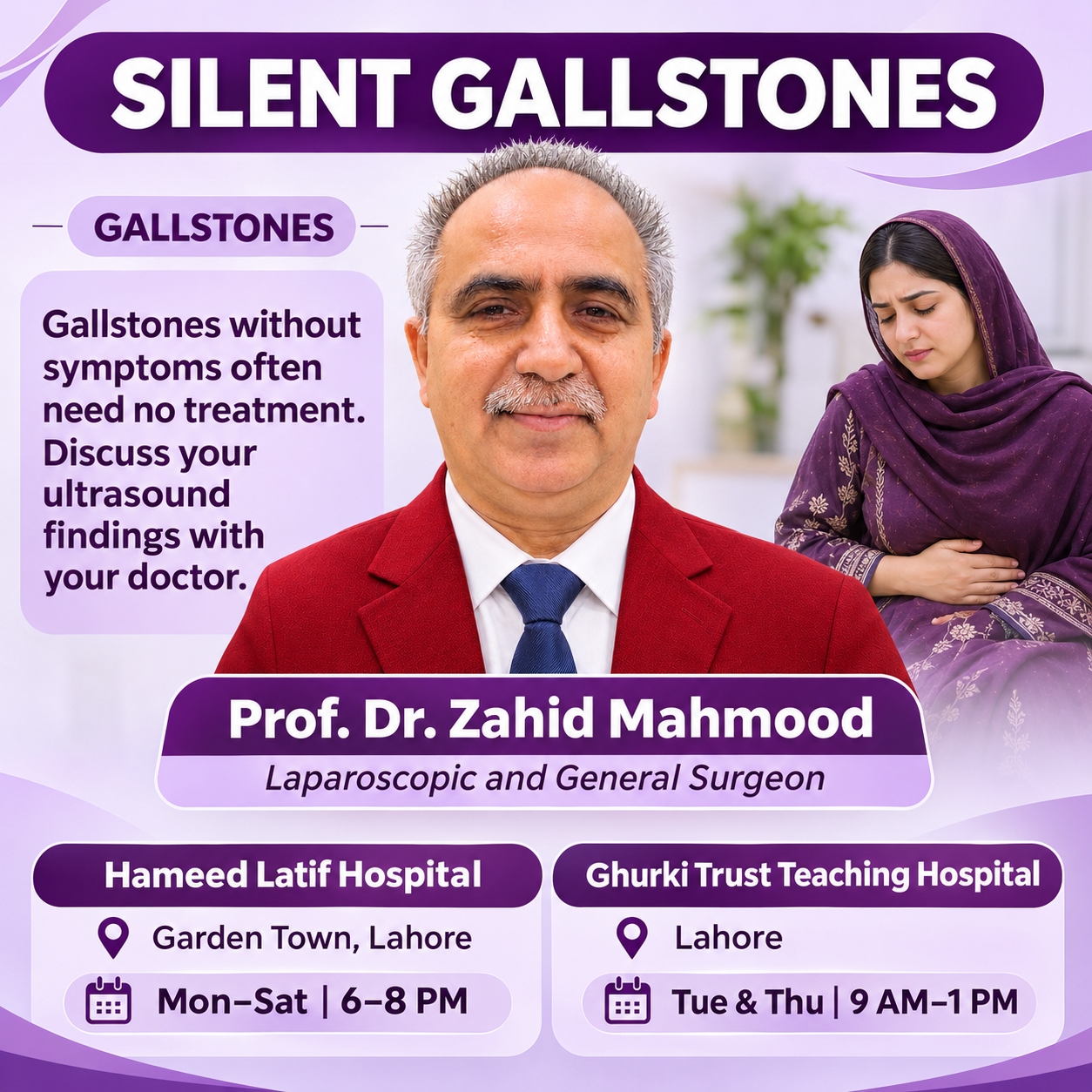
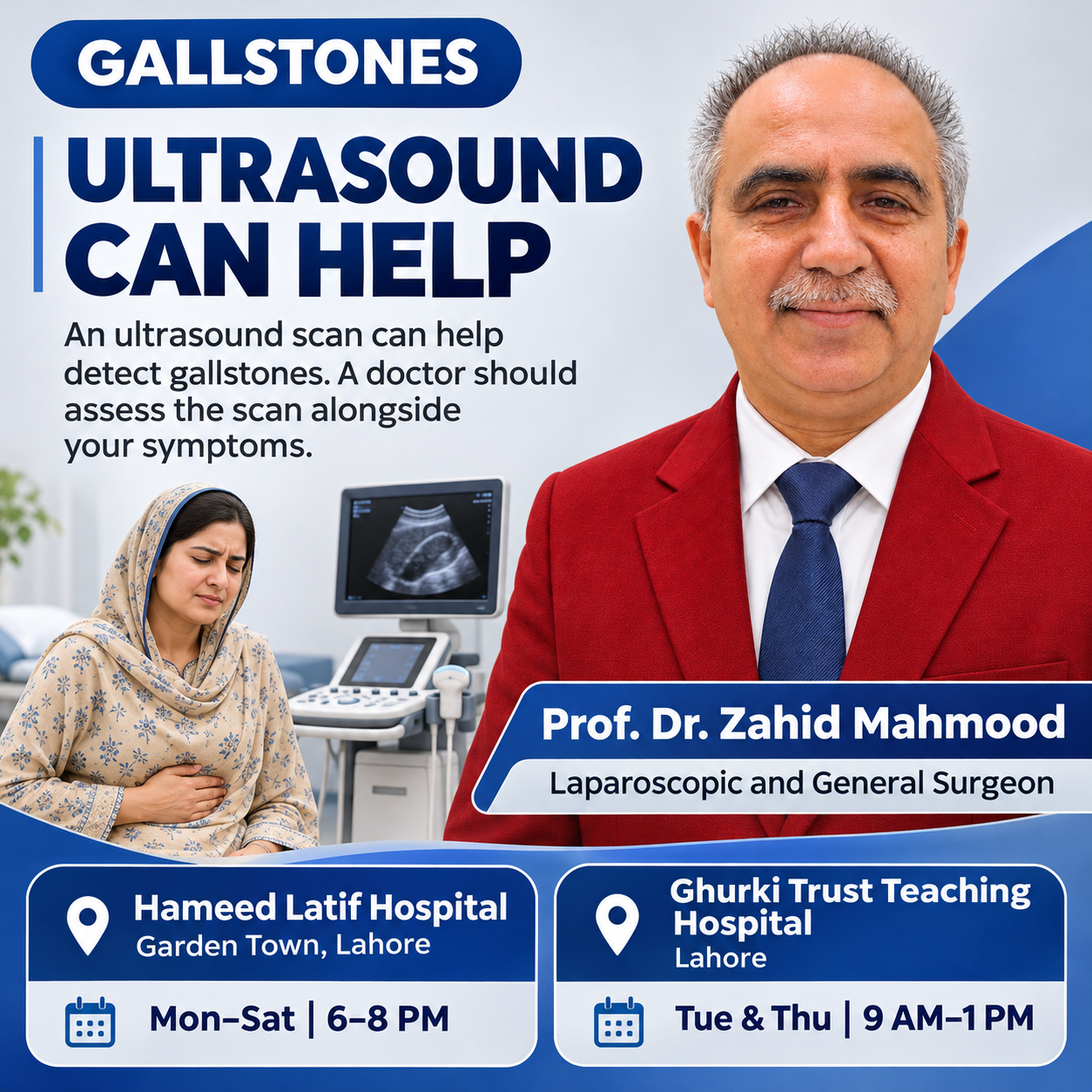
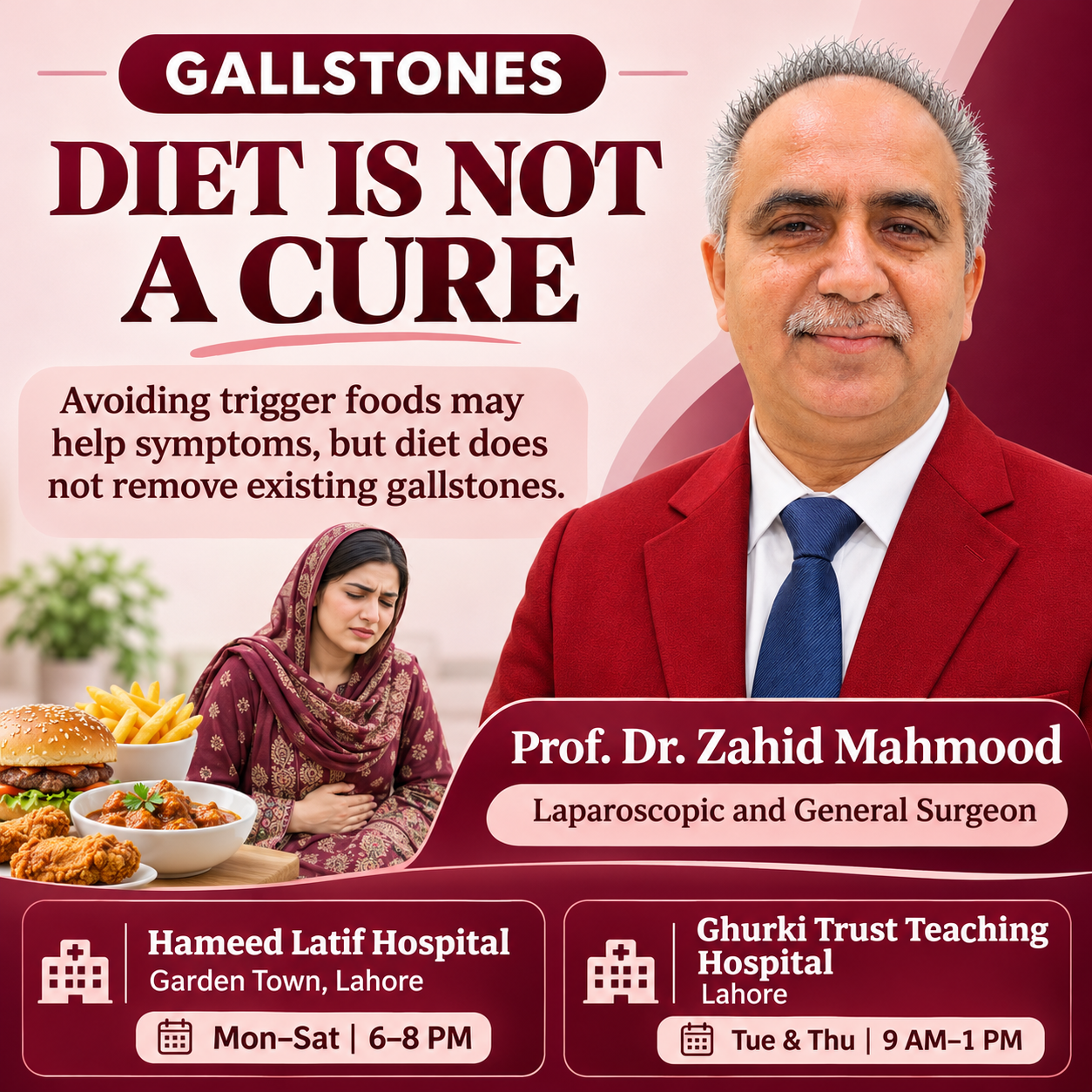
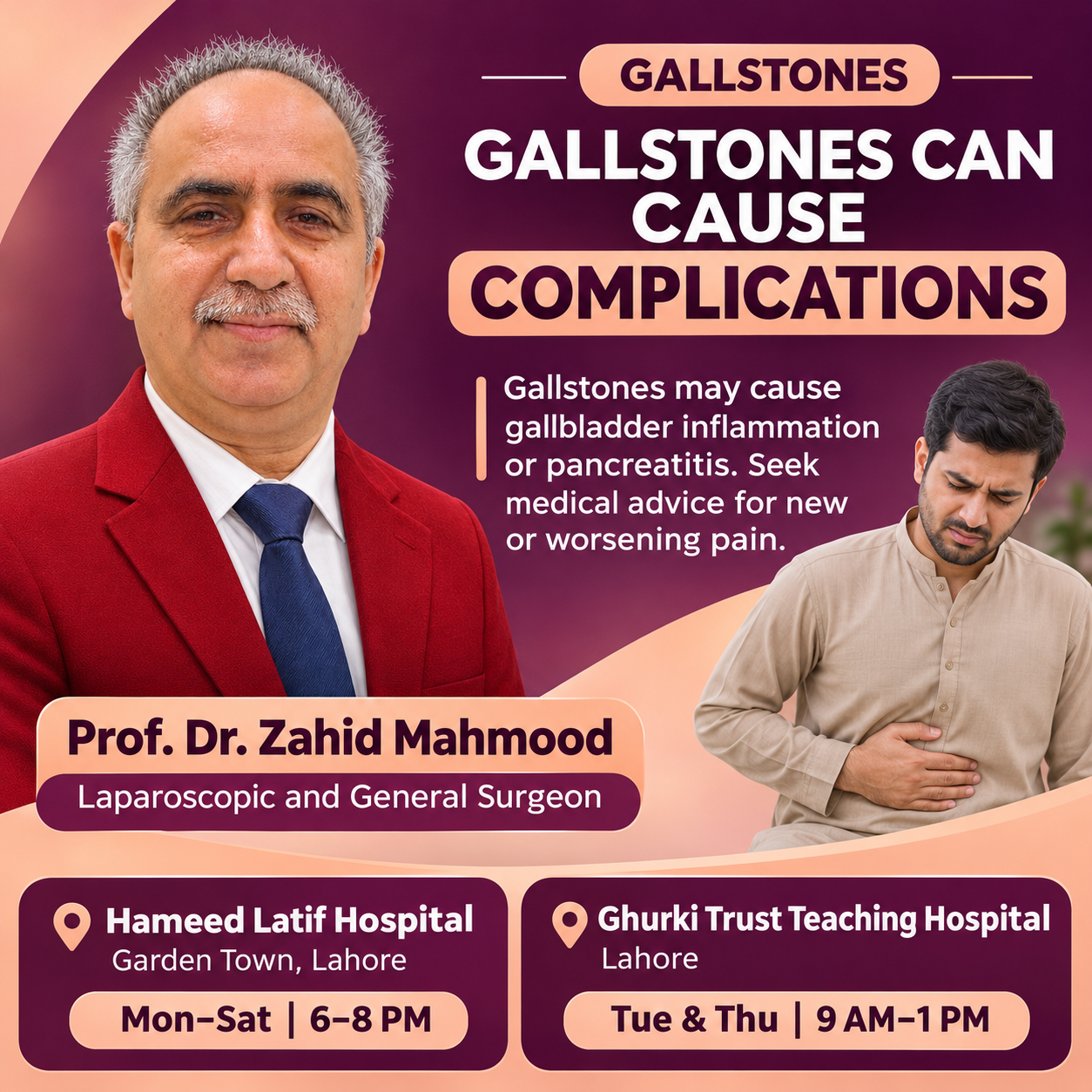
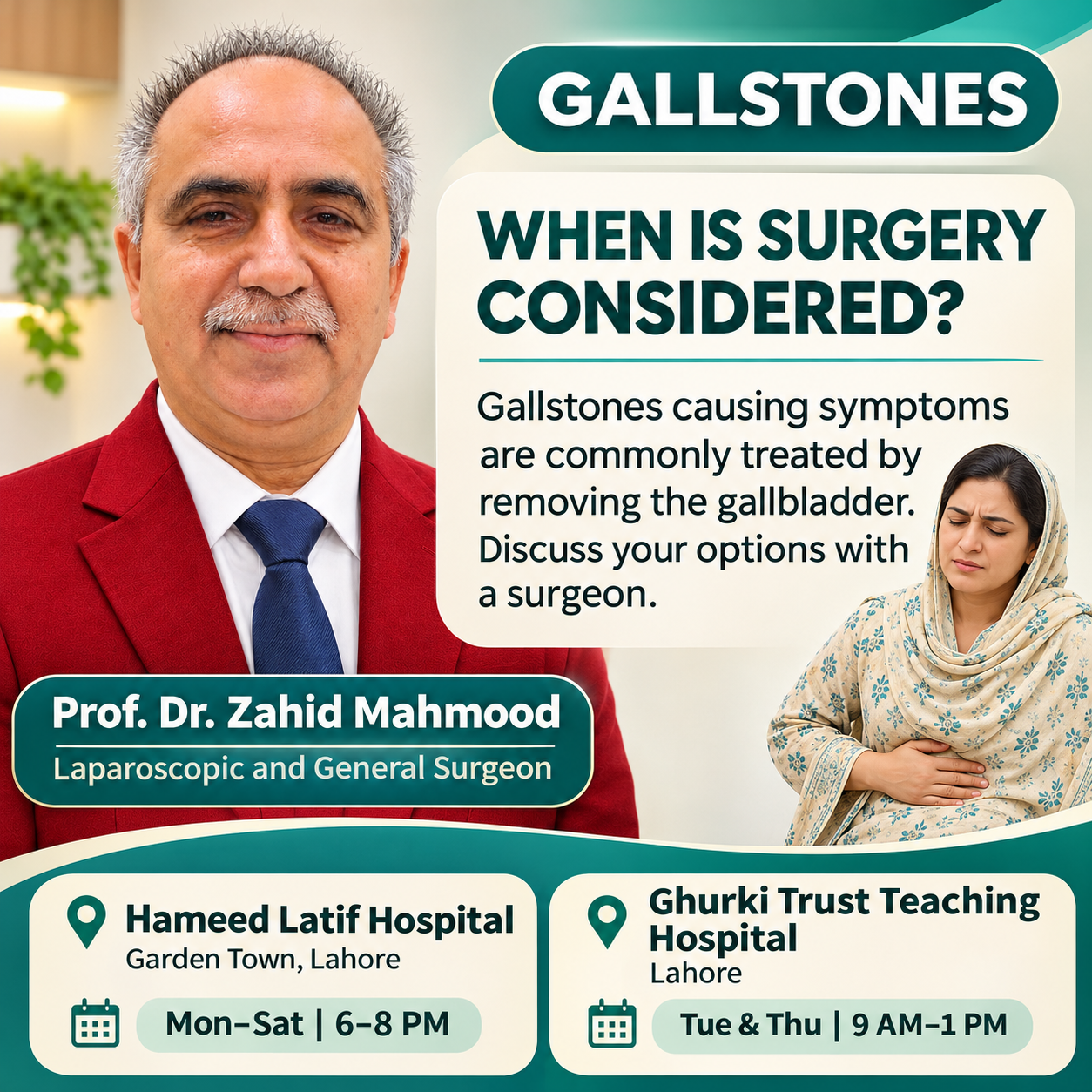
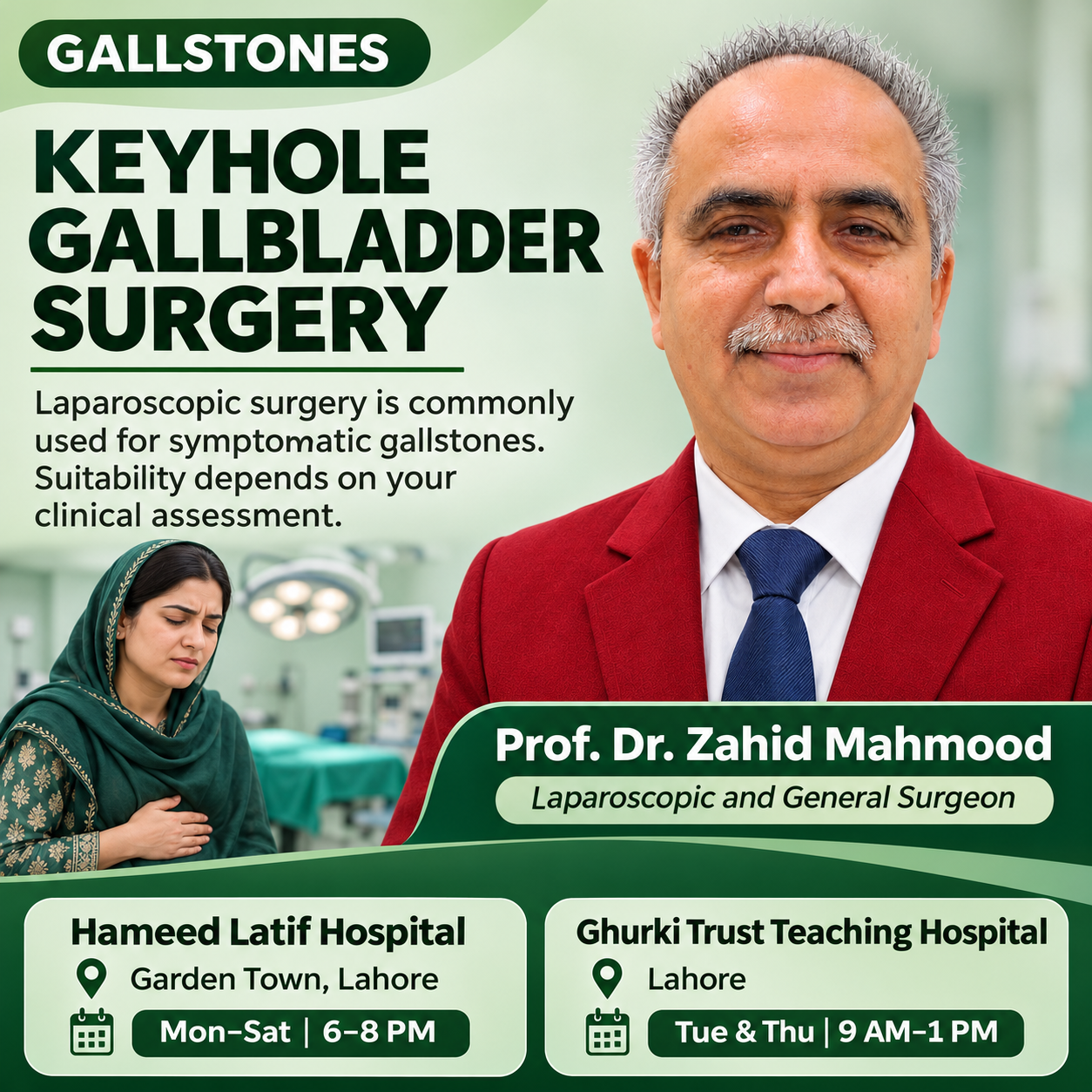
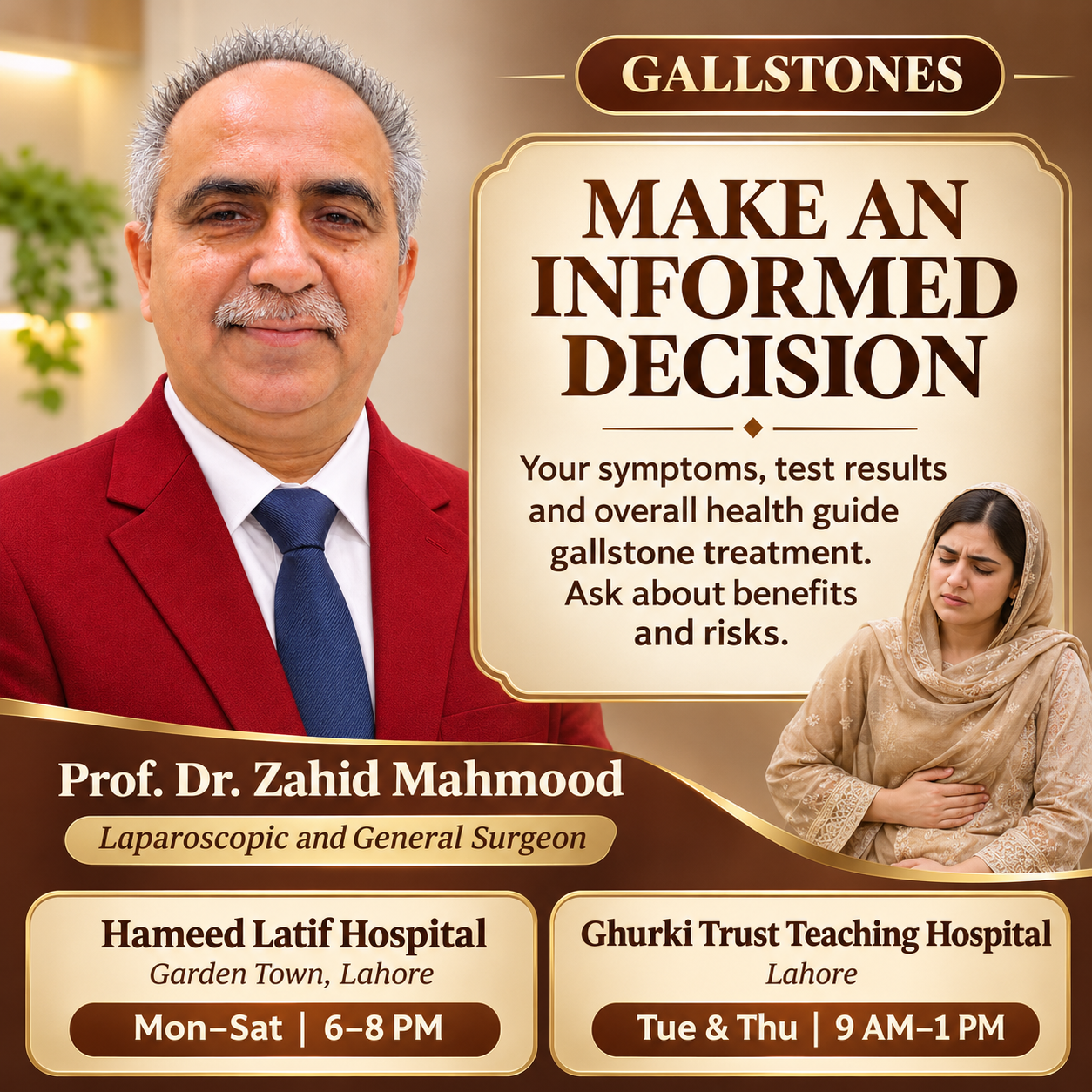
When to seek urgent medical care
Severe or persistent abdominal pain, fever or chills, yellow eyes or skin, or repeated vomiting need urgent assessment. Go to the nearest emergency department if you are severely unwell. Do not wait for a routine appointment or a WhatsApp reply.
Could your symptoms be caused by gallstones?
Gallstones are solid deposits in the gallbladder, a small organ beneath the liver. Some cause no symptoms; others interrupt bile flow and cause attacks of pain.
- Pain under the right ribs or in the upper-middle abdomen, sometimes spreading to the back or right shoulder.
- An attack that lasts more than 30 minutes and may continue for several hours.
- Nausea or vomiting; some attacks follow meals.
Bloating or indigestion alone does not prove that gallstones are the cause. Assessment helps distinguish gallbladder pain from other conditions.
What happens at your consultation?
1. Review your symptoms
Discuss your pain, previous attacks, medical conditions, medicines and any previous operations.
2. Review your tests
Bring your ultrasound and available blood tests. Ultrasound and liver tests are common first investigations; additional tests depend on the findings.
3. Agree on a plan
Discuss whether monitoring, further investigation or treatment is appropriate, including benefits, alternatives and individual risks.
Do you need treatment or surgery?
Stones without symptoms
Stones found by chance in an otherwise normal gallbladder and bile ducts usually do not need treatment. Individual circumstances may change this advice.
Painful gallbladder stones
Laparoscopic cholecystectomy — removal of the gallbladder through small incisions — is commonly offered for symptomatic stones after assessment.
Stones in the bile duct
A duct stone may need a separate treatment such as ERCP to clear the duct, alongside a plan for gallbladder surgery.
While awaiting assessment or treatment, avoiding foods that reliably trigger symptoms may help. Diet and pain relief do not remove the underlying stones.
Understanding laparoscopic gallbladder surgery
The operation is performed under general anaesthesia using a camera and small incisions. The gallbladder is removed rather than simply emptying out its stones. Occasionally an open or modified procedure is safer because of inflammation or difficult anatomy.
Risks to discuss include bleeding, infection, bile leakage, bile-duct injury, retained duct stones, blood clots and anaesthetic complications. Your own risk depends on your health and the complexity of the operation.
Recovery: what should you expect?
Many people go home the same day or after an overnight stay following uncomplicated keyhole surgery. Return to desk-based work is often possible in about one to two weeks; heavy work, open surgery or complications can mean a longer recovery. Follow your own surgical team’s advice.
Light activity is usually built up gradually. Most people can eat normally without a gallbladder, although smaller meals may feel more comfortable at first. Worsening pain, fever, jaundice or wound discharge after surgery needs prompt medical advice.
Your consulting surgeon

Prof. Dr. Zahid Mahmood
MBBS, FCPS (Surgery)
General, Laparoscopic & Laser Surgeon
Consultations at Hameed Latif Hospital and Ghurki Trust Teaching Hospital, Lahore. Bring your symptoms and reports for an individual assessment and discussion of treatment choices.
Common patient questions
Does every gallstone need an operation?
No. Symptom-free gallbladder stones often need no treatment. Symptoms, complications, duct stones and particular clinical findings can change the recommendation.
Can medicine or a diet remove the stones?
Diet may reduce food-triggered attacks but does not reliably clear stones. Medicines have a limited role in selected patients; they are not a routine substitute for surgery for symptomatic gallstones.
Can I live normally without a gallbladder?
Yes. Your liver continues to make bile. Most people return to a normal diet and routine, although temporary bowel changes can occur.
How much does surgery cost in Lahore?
The estimate depends on the hospital, investigations, anaesthesia, type of operation and anticipated stay. Request an itemised estimate after assessment; a fixed price cannot be promised without reviewing your case.
What should I bring?
Bring your ultrasound and other relevant reports, a list of medicines and allergies, and details of previous operations. Do not stop prescribed medicines unless your treating team advises you.
Is my appointment confirmed when I send a message?
No. Calling or messaging requests an appointment. The clinic will confirm the location, date and time with you.
Request a gallstones consultation
Call 0300 4130159 or send an appointment request on WhatsApp. Please state your name, preferred clinic and suitable day.
Ghurki Trust Teaching Hospital, Lahore
Tuesday & Thursday
9:00 AM–1:00 PM
Please confirm availability before travelling. An appointment is confirmed only after the clinic responds. These contact routes are for routine appointments, not emergency care.
Further reading
Medical information sources: NICE gallstone disease guideline; NHS gallstones information; NHS guidance on recovery and complications.
Updated 9 November 2026. This page provides general education; diagnosis and treatment require an individual clinical assessment.