

Introduction
Laparoscopic surgery is widely known for being a safe and minimally invasive procedure. However, like any surgical method, it carries certain risks and potential complications. Patients often search for complications of laparoscopic surgery, risks of laparoscopic surgery, and warning signs they should not ignore after the procedure.
Understanding these risks helps patients stay informed, recognize early symptoms, and ensure a smoother recovery.
Is Laparoscopic Surgery Safe?
Laparoscopic surgery is generally considered very safe and is performed worldwide for a wide range of conditions.
Why It Is Safe:
- Smaller incisions
- Reduced blood loss
- Lower infection risk compared to open surgery
- Faster recovery time
👉 However, no surgery is completely risk-free.
Common Complications of Laparoscopic Surgery
Although rare, some complications may occur.
⚠️ Most Common Complication of Laparoscopic Surgery:
- Mild infection
- Temporary pain
- Gas-related discomfort
Other Possible Risks:
- Bleeding after laparoscopic surgery
- Injury to nearby organs (rare)
- Reaction to anesthesia
👉 Most of these complications are uncommon and manageable.

Laparoscopic Surgery Infection
One of the main concerns is laparoscopic surgery infection.
Causes of Infection:
- Poor wound care
- Bacteria entering surgical site
- Weak immune system
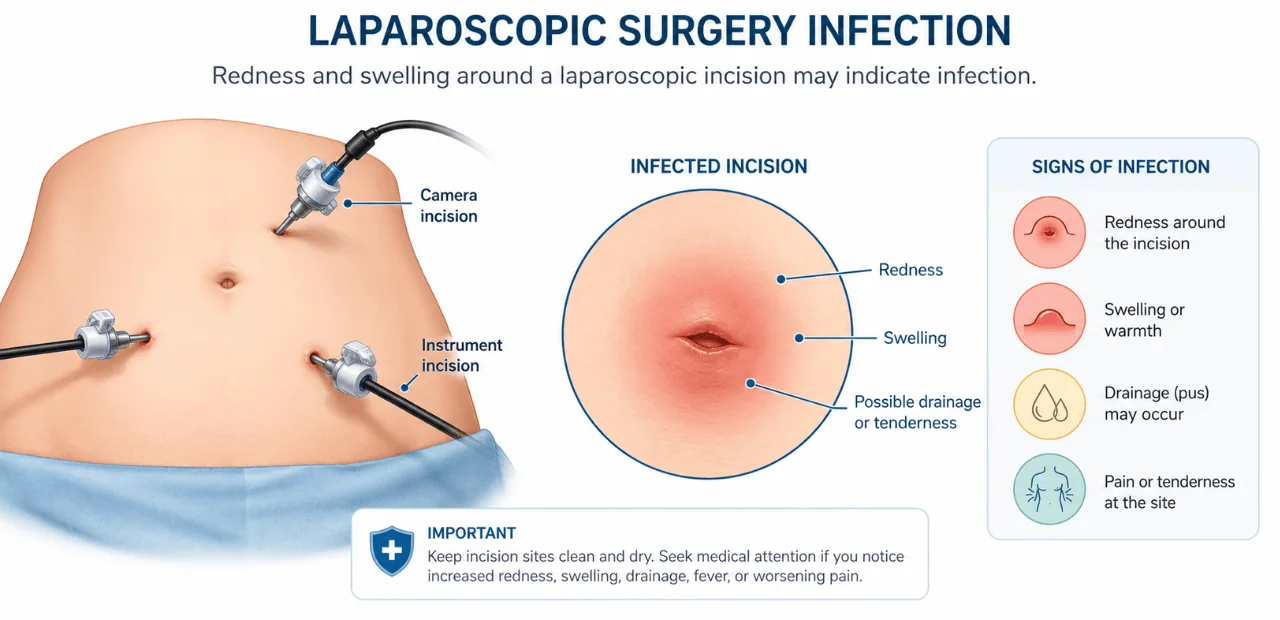
Signs of Infection:
- Redness around incision
- Swelling
- Pus or discharge
- Fever
👉 Early treatment can prevent serious complications.
Bleeding After Laparoscopic Surgery
Minor bleeding is normal, but excessive bleeding requires attention.
When to Be Concerned:
- Continuous bleeding
- Blood soaking dressings
- Severe abdominal pain
👉 Contact your doctor immediately if these symptoms occur.

Warning Signs After Laparoscopic Surgery
It is important to recognize warning signs after laparoscopic surgery.
🚨 Seek Medical Help If You Notice:
- High fever
- Severe or increasing pain
- Persistent vomiting
- Difficulty breathing
- Unusual swelling
👉 These may indicate complications that need immediate care.
How to Reduce Risks After Surgery
Following proper care significantly reduces complications.
✅ Safety Tips:
- Follow doctor’s instructions
- Keep wounds clean and dry
- Take medications as prescribed
- Avoid heavy lifting
- Attend follow-up appointments
👉 Prevention is key to a smooth recovery.
Factors That Increase Risk
Some patients may have higher risk depending on:
- Age
- Chronic diseases (diabetes, heart issues)
- Obesity
- Smoking
👉 Your doctor evaluates these factors before surgery.
Long-Term Outlook
Most patients recover without complications and return to normal life quickly.
👉 Laparoscopic surgery remains one of the safest and most effective surgical techniques available today.
Conclusion
While laparoscopic surgery is generally safe, being aware of the risks of laparoscopic surgery and potential complications is essential. Early detection of symptoms like infection or bleeding ensures timely treatment and prevents serious issues.
👉 Always follow medical advice and report any unusual symptoms to your doctor.
❓ FAQs
1. What are the most common complications of laparoscopic surgery?
Mild infection, pain, and gas discomfort are the most common.
2. Is laparoscopic surgery safe?
Yes, it is a safe and widely used minimally invasive procedure.
3. What are warning signs after laparoscopic surgery?
Fever, severe pain, swelling, or discharge from wounds.
4. Can infection occur after laparoscopic surgery?
Yes, but it is rare and usually treatable.
5. When should I see a doctor after surgery?
If you experience severe pain, fever, or unusual symptoms.
Related Articles
- Laparoscopic Surgery Explained – Process, Procedure & Recovery Time
- Laparoscopic Surgery Guide – Recovery, Cost, Safety & Comparison
- Laparoscopic Surgery Recovery Time: Complete Guide
Related articles
- What is Laparoscopic Surgery? Complete Guide + Recovery Time & Tips
- Types of Laparoscopic Surgeries – Procedures, Recovery & Benefits
- Laparoscopic Surgery Explained – Process, Procedure & Recovery Time
- Laparoscopic Surgery Guide – Recovery, Cost, Safety & Comparison
- Laparoscopic Surgery Recovery Time: Complete Guide
Other conditions we treat
- Acute Appendicitis: Symptoms, Warning Signs & Treatment in Lahore
- Breast Lumps and Breast Cancer: What Every Woman Should Know
- Gallstones: The Complete Patient Guide to Symptoms, Causes, and Treatment
- Gastric (Stomach) Cancer: How It Is Treated — and Why Early Diagnosis Changes Everything
- What Is Complex Surgery? Complete Guide
- Hernia: The Complete Patient Guide to Symptoms, Types, Causes, and Treatment
- Parotid Tumours: Symptoms, Causes & Treatment in Lahore
- Treatment of Haemorrhoids (Piles) in Pakistan: A Surgeon’s Honest Guide
- Thyroid Diseases: Symptoms, Goitre, Lumps & Treatment in Lahore
- Varicose Veins: Causes, Symptoms & When to See a Vascular Surgeon in Pakistan